What the numbers mean
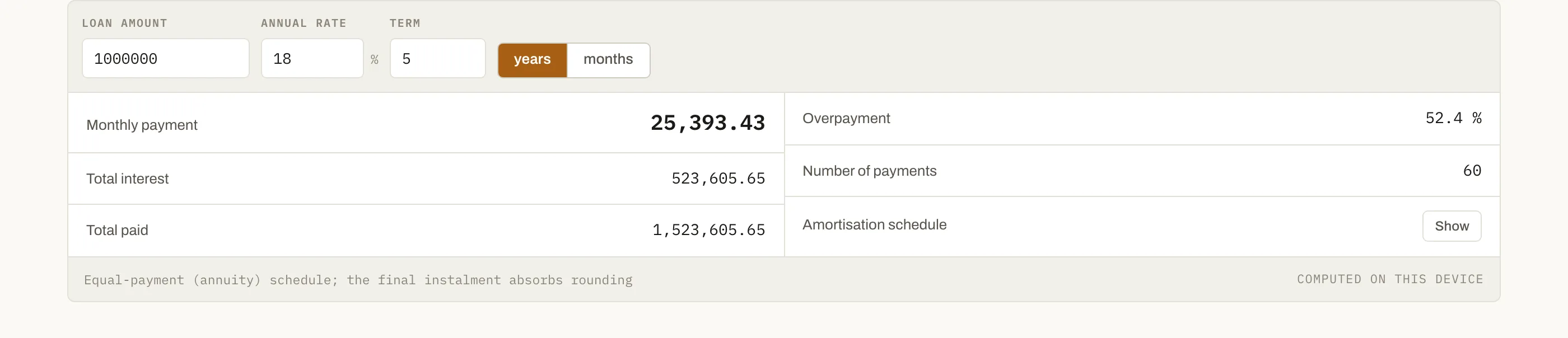
- Monthly payment — the same amount every month, principal and interest combined.
- Total interest — what the loan costs you on top of the amount borrowed.
- Overpayment — the same figure as a percentage of the principal, which is the number that makes a long term feel real.
Term length is the lever, not the rate
Lengthening the term lowers the monthly payment and raises the total cost, often sharply. Doubling a term does not double the interest — it more than doubles it, because the balance stays high for longer and interest accrues on that balance every month. Try the same amount and rate over five, ten and twenty years and compare the overpayment line rather than the payment line.
Read the schedule before you sign
The amortisation table is the part worth actually reading. It shows the month where the principal portion overtakes the interest portion, and how much you would still owe if you sold or refinanced partway through. On a long loan that crossover can fall well past the midpoint of the term.
What this does not model
Fees, insurance, early repayment, variable rates and payment holidays all change the real cost, and none of them are here. Use this to compare the shape of two offers; use the lender's disclosure for the total you will actually pay.
Questions
What kind of schedule is this?+
An annuity, or equal-payment, schedule: every instalment is the same size, and the split between interest and principal shifts over the term. The alternative — a differentiated schedule, where the principal portion is constant and payments shrink — costs less in total but starts much higher. Ask which one a lender is quoting before comparing offers.
Why is the last payment slightly different?+
Rounding. Each month's interest is computed on the exact balance, and thirty years of half-cent differences have to land somewhere. The final instalment absorbs them so the balance ends at exactly zero rather than a few units either side.
Does this include fees and insurance?+
No. It models principal and interest only. Origination fees, compulsory insurance and account charges are what separate the advertised rate from the effective one, and they are why two loans at the same nominal rate can cost noticeably different amounts.
Why does so much of the early payment go to interest?+
Interest is charged on what you still owe, and at the start you owe almost everything. On a twenty-year loan at a typical rate, the halfway point in time is nowhere near the halfway point in principal repaid. The schedule below makes that visible — it is the single most useful thing to look at before signing.