The four types worth doing first
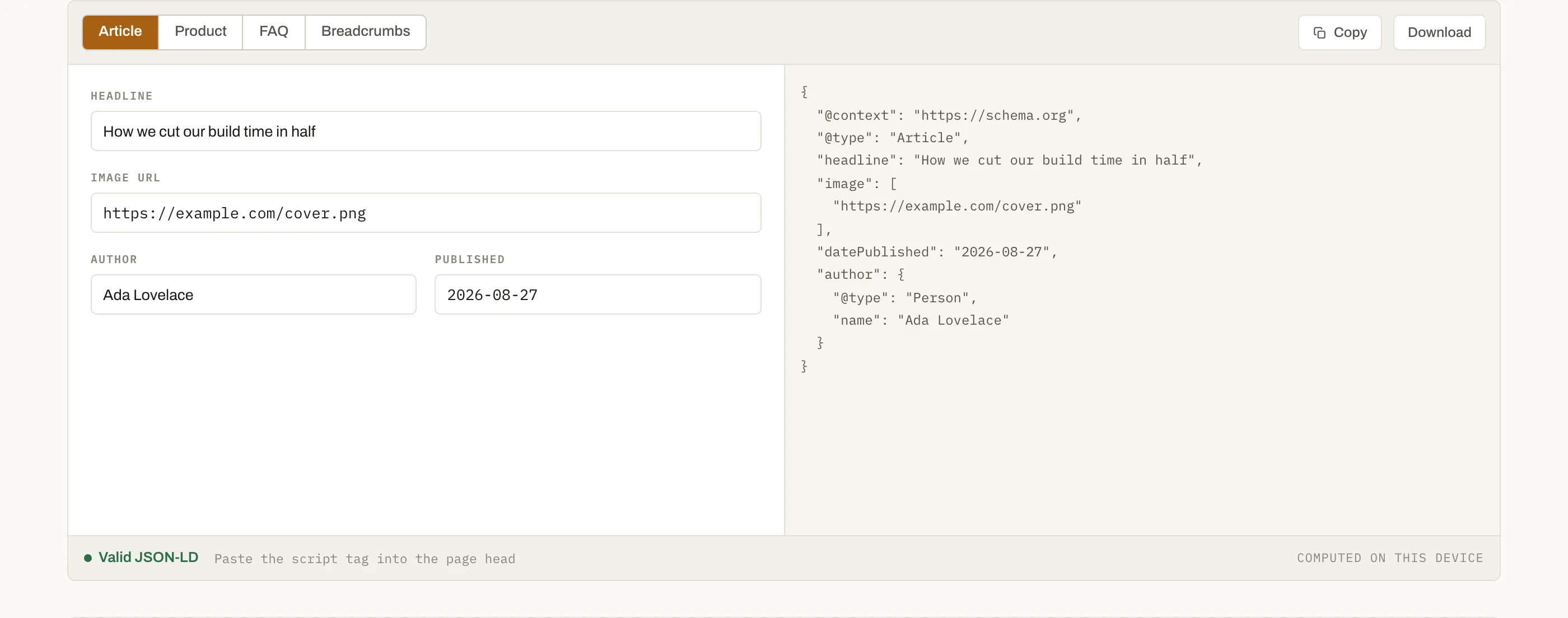
- Article — publication date, author and headline for anything written.
- Product — price, currency and availability, which is what puts a figure in the listing.
- FAQPage — question and answer pairs, which can expand directly in results.
- BreadcrumbList — replaces the raw URL in a listing with a readable trail.
Between them they cover most sites. The rest of schema.org is a long tail worth reaching for only when you know which rich result you are targeting.
Where the tag goes
One <script type="application/ld+json"> in the <head>, or anywhere in the
body — position does not matter, only that it is in the served HTML. If your
page renders client-side, make sure the markup is in the initial response;
structured data injected after hydration is unreliable for crawlers.
Match what is on the page
The rule that gets sites penalised is simple: the markup has to describe the visible content. FAQ markup for questions that appear nowhere, review aggregates with no reviews, or a price that differs from the one displayed are all grounds for a manual action, and the recovery is slower than the gain ever was.
Validate before shipping
Generated JSON-LD is syntactically valid by construction — this tool cannot produce a broken object. What it cannot check is whether the values are true and whether required fields for a particular rich result are present, since those requirements change. Run the final page through the search engine's own rich results test before assuming it qualifies.
Questions
Does structured data improve rankings?+
Not directly. It makes a page eligible for rich results — star ratings, FAQ accordions, breadcrumb trails, price and availability in the listing — which raises click-through rather than position. Eligibility is not a guarantee either; search engines decide per query whether to show the enhanced form.
JSON-LD, Microdata or RDFa?+
JSON-LD. Google recommends it, it sits in one script tag instead of being woven through your markup, and it survives a redesign because it is not attached to specific elements. Microdata still works but every template change risks breaking it.
Can the markup describe things not visible on the page?+
No, and this is a policy with teeth. Structured data must match what a visitor actually sees. Marking up FAQ entries that are not on the page, or review scores nobody left, is a manual-action risk, not a clever trick. If the FAQ block is generated, make sure it renders.
Do I need Breadcrumb markup if I already show breadcrumbs?+
Yes, if you want the trail in the search listing rather than a raw URL. Visual breadcrumbs tell a visitor where they are; BreadcrumbList tells a crawler, and that is what replaces the URL line in the result.